

Big projects are exciting—year-long blankets, handmade gifts for everyone, a whole wardrobe of cardigans—but without a plan, crochet goals can start to feel heavy instead of fun. The good news? You don’t need more time or motivation. You just need a simple way to turn those big ideas into tiny weekly steps you can actually follow.
In this guide, we’ll go from dreamy “someday” projects to calm, realistic weekly plans. You’ll learn how to set clear crochet goals for your crochet year, break them into milestones, map them across months, and finally turn them into easy, cozy weekly plans that fit your real life.
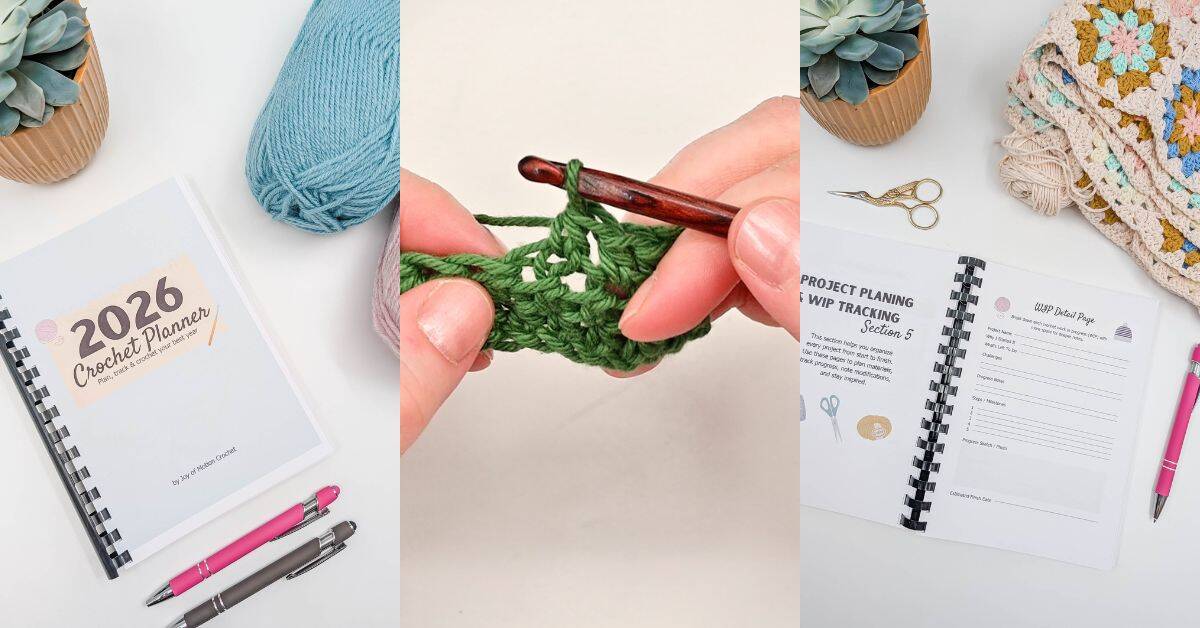

Table of Contents
1. Start with Your Big Crochet Vision for the Year
Before you think about planners, charts, or checklists, pause and ask: What do I want my crochet life to feel like this year? Your crochet goals will be much easier to stick with if they match your season of life.
- Do you want crochet to feel calm and restorative after busy days?
- Do you want it to feel exciting and challenging, pushing you to try new techniques?
- Do you want more finishes and fewer abandoned WIPs?
Look back at the last year:
- Which projects did you actually finish—and which ones quietly drifted into the WIP pile?
- Did you want to make more gifts, but ran out of time?
- Did you buy yarn for a dream project but never started?
Use those reflections to sketch out a loose vision. Then list a few big dreams that could become concrete crochet goals later, such as:
- Finish a cardigan I actually wear regularly.
- Make at least one handmade gift per month.
- Use up a specific part of my yarn stash.
- Learn 3–5 new stitches or techniques.
You’re not committing yet—you’re just gathering possibilities.
2. Choose 3–5 Big Crochet Goals (So You Don’t Overload Yourself)
Now it’s time to narrow down. A huge wishlist looks inspiring on paper, but it quickly becomes overwhelming. The magic happens when you choose just a few crochet goals to guide your year.
Think in broad categories:
- Skill goals
- Learn Tunisian crochet
- Try mosaic crochet, cables, lace, or colorwork
- Project goals
- Finish one or two cardigans
- Make a temperature blanket
- Complete a large throw or bedspread
- Stash goals
- Use up a certain number of skeins
- Focus on scrap-busting projects each month
- Gift goals
- Make one gift per month
- Prepare all holiday gifts by the end of November
Pick 3–5 crochet goals that genuinely excite you and feel realistic for your current life. Write them down somewhere visible—your crochet planner, a notebook, or a sticky note on your yarn shelf.
Would you like to save this?
We will email this pattern to you, so you can come back to it later.
Free, and you can unsubscribe any time.
3. Turn Each Big Goal into Clear Milestones
A big goal like “Finish a crochet cardigan” can feel vague and intimidating. Breaking it into milestones makes it actionable and far less scary.
Think of milestones as chunks that can be finished in 2–4 weeks:
Example: “Finish a crochet cardigan I’ll wear”
- Milestone 1: Choose pattern, take measurements, and swatch.
- Milestone 2: Crochet the back panel.
- Milestone 3: Crochet front panels.
- Milestone 4: Crochet sleeves.
- Milestone 5: Join, add edging, and weave in ends.
Do this for each of your crochet goals:
- “Make 12 gifts this year” → 1 gift per month, or 3 per quarter.
- “Use 10 skeins from stash” → 2–3 stash-busting projects per season.
- “Learn 5 new stitches” → 1 new stitch every few weeks, then a small project using it.
When your crochet goals are broken into milestones, you can actually see the steps between “today” and “finished project.”
4. Map Milestones onto Months (Simple Monthly Roadmap)
Next, give your milestones a home in the calendar. This doesn’t have to be perfect; it’s just a roadmap.
- Look at your list of milestones and spread them across the months.
- Try not to stack all the heavy work into the same month.
- Keep your crochet goals aligned with seasons and your energy.
For example:
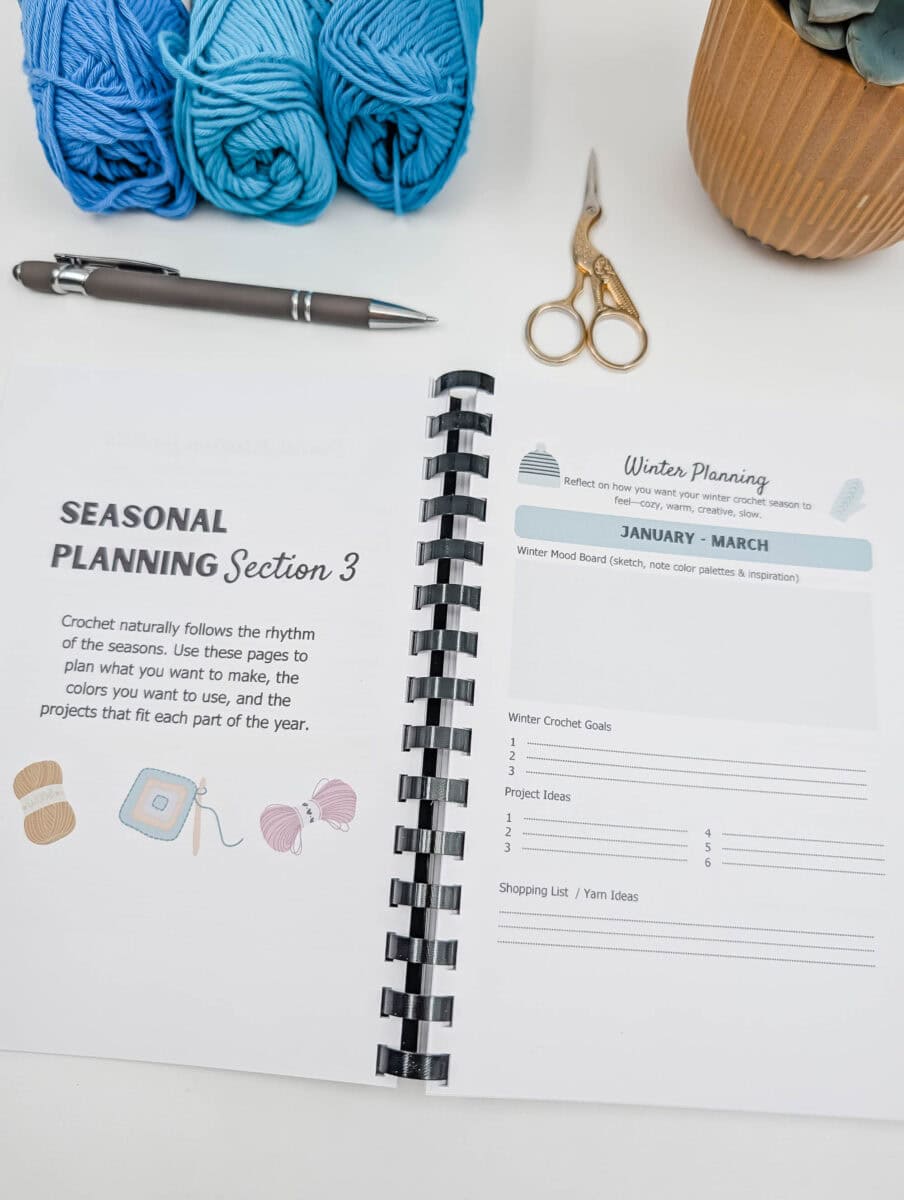
- Winter – Cozy cardigans, blankets, and bigger WIPs.
- Spring – Lighter garments, shawls, and fresh stash-busting projects.
- Summer – Portable projects like accessories, tops, and small gifts.
- Fall – Gift-making season, final cardigan or blanket pushes.
Also mark fixed deadlines: birthdays, baby showers, holidays, markets. Slot gift milestones earlier than you think you need them, so your crochet goals don’t become last-minute stress.
5. Turn Monthly Crochet Goals into Weekly Plans
Now we zoom in from “this year” and “this month” to the real magic: this week.
Look at one month at a time. Ask:
- What are my main crochet milestones for this month?
- How many evenings or hours can I realistically crochet each week?
Then create 1–3 small weekly tasks that support your crochet goals. For example:
- “Finish 10 rows on cardigan back.”
- “Start and finish one small gift (like a mug cozy or headband).”
- “Choose yarn and pattern for next stash-busting project.”
Weekly plans should feel light and doable. If you look at your list and feel pressure or dread, shrink it. Your crochet goals will still move forward with tiny steps.
6. Plan Around Seasons, Deadlines & Your Real Life
Even the best crochet goals won’t work if they ignore your actual life. Take a moment to map out:
- Busy months (travel, exams, kids’ activities, work deadlines)
- Quiet months with more home time
- Seasonal energy shifts—when you naturally feel more or less motivated
For busy seasons, schedule smaller weekly tasks:
- Weaving in ends
- Finishing small projects
- Swatching and planning for your next big make
For calmer months, you can assign bigger milestones: starting a new cardigan, tackling a large blanket, or focusing heavily on one of your crochet goals.
Remember, you’re allowed to adapt. Planning around your life makes your crochet goals sustainable instead of stressful.
7. Use a Weekly Crochet Planner Layout That Supports Your Goals
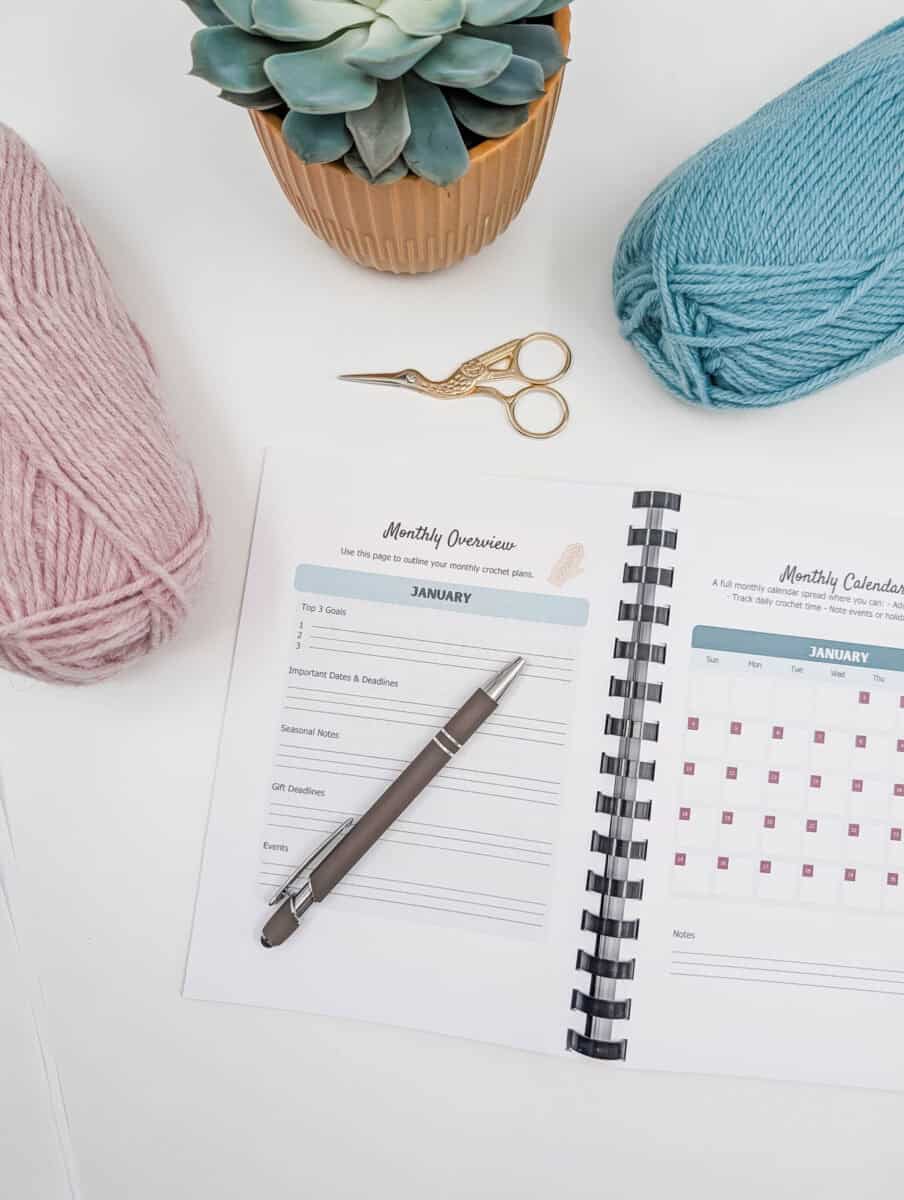
A good layout keeps your crochet goals in front of you without feeling like homework. Whether you use a printable crochet planner or a digital tool, consider a simple weekly structure like:
- Top section: “This Week’s Crochet Goals”
- 1–3 clear tasks (e.g. “Finish sleeve 1,” “Choose pattern for March gift”).
- Middle section: WIPs to touch at least once
- A short list of active projects.
- Notes section
- Yarn details, hook sizes, any changes you made to the pattern.
- Next week preview
- One or two things you might start, if you finish early.
The goal isn’t to create a perfect planner—it’s to give your crochet goals a cozy little home where you can see them at a glance.
8. Protect Your Weekly Crochet Time with Simple Routines
Even the most beautifully broken-down crochet goals won’t happen if you never sit down to stitch. Crochet habits make it easier:
- Choose a default crochet time most days:
- After dinner
- During your favorite TV show
- 15–20 minutes before bed
- Try themed days:
- “WIP Wednesday” – focus only on works-in-progress
- “Finish-it Friday” – weave in ends, sew seams, block pieces
- Pair crochet with something you love:
- An audiobook, podcast, cozy drink, or favorite series
When your routines are simple and flexible, your crochet goals become part of everyday life—not another thing on your to-do list.
9. Track Progress & Adjust Your Crochet Goals Without Guilt
At the end of the week, take 5–10 minutes to check in:
- What did I actually work on?
- Did any project move closer to a milestone?
- Did I enjoy the projects I chose?
If you didn’t finish everything, that’s normal. Instead of feeling behind, ask:
- Was my weekly plan too ambitious?
- Did something unexpected come up?
- Do these crochet goals still feel right for me?
You can:
- Break tasks into even smaller steps.
- Move a milestone to next month.
- Let go of a goal that no longer excites you.
Crochet is supposed to be joyful. Your crochet goals are there to support that joy—not to create pressure.
10. Example: 3 Big Crochet Goals Turned into 12 Weeks of Plans
Let’s put this into a real-life example. Imagine you set these three crochet goals:
- Finish one cozy cardigan.
- Make 6 handmade gifts this year.
- Use 10 skeins from your yarn stash.
You break them into milestones:
- Cardigan: swatch, panels, sleeves, finishing.
- Gifts: 2 gifts per season.
- Stash: choose stash-friendly patterns and assign them to specific months.
Then, for one 12-week stretch, your weekly plans might look like:
- Week 1: Swatch for cardigan, pick yarn for first gift.
- Week 2: Start cardigan back panel (10–15 rows), start gift #1.
- Week 3: Finish back panel, finish gift #1.
- Week 4: Start front panels, choose simple stash-busting project.
- Week 5: Work on front panels, start stash project using 1–2 skeins.
- Week 6: Finish front panels, finish stash project.
- Week 7: Start sleeves, plan gift #2.
- Week 8: Continue sleeves, work on gift #2.
- Week 9: Finish sleeves, weave in ends on gift #2.
- Week 10: Join cardigan pieces, start edging.
- Week 11: Finish edging, block cardigan.
- Week 12: Take photos, wear your cardigan, and review your crochet goals for the next quarter.
Notice how each week stays light but still moves you forward.

11. When You Fall Behind on Crochet Goals (And How to Reset)
Life happens. Illness, stress, travel, or just low energy can knock your plans sideways. Falling behind on crochet goals doesn’t mean you failed—it just means you’re human.
When that happens:
- Reset with one tiny action.
- Weave in ends on a small project.
- Do 5–10 rows on something easy.
- Reorder your priorities.
- Which project feels most exciting right now? Start there.
- Release what no longer fits.
- If a goal feels heavy, it’s okay to pause, shrink, or let it go entirely.
Your crochet goals are meant to serve your creativity and well-being. You’re allowed to change them whenever you need to.
12. Your Crochet Goals, One Cozy Week at a Time
Big dreams like handmade wardrobes, thoughtful gifts, or heirloom blankets don’t happen all at once. They happen row by row, week by week, with gentle plans that respect your real life.
Choose your 3–5 main crochet goals, break them into milestones, give those milestones a home in your months, and then create small, kind weekly plans. You’ll be amazed at how much you can finish when your goals are broken into stitches you actually have time for.