

Learning how to track crochet progress is one of the most motivating things you can do as a maker.
When you document your stitches, yarn choices, projects, and creative breakthroughs, you start to see just how much you’ve learned — and how much you’ve made.
From snapping quick photos to using a crochet planner or digital tools, this guide will help you track your crochet journey in a way that feels simple and inspiring.
If you want even more ways to stay organized, explore my Free Crochet Patterns and the full Crochet Tutorials library for helpful techniques and ideas.

Table of Contents
Why You Should Track Crochet Progress to Become a Better Crocheter
Keeping track of your crochet work can:
- Highlight your growth and skill development.
- Boost motivation as you see your projects add up month by month.
- Reduce overwhelm when juggling multiple WIPs.
- Make it easier to plan yarn use, crochet gifts, and seasonal projects.
- Help you avoid repeating mistakes and remember what worked well.
- Create a cozy record of your creative year.
By documenting your progress, you make space for more intentional, joyful crochet.
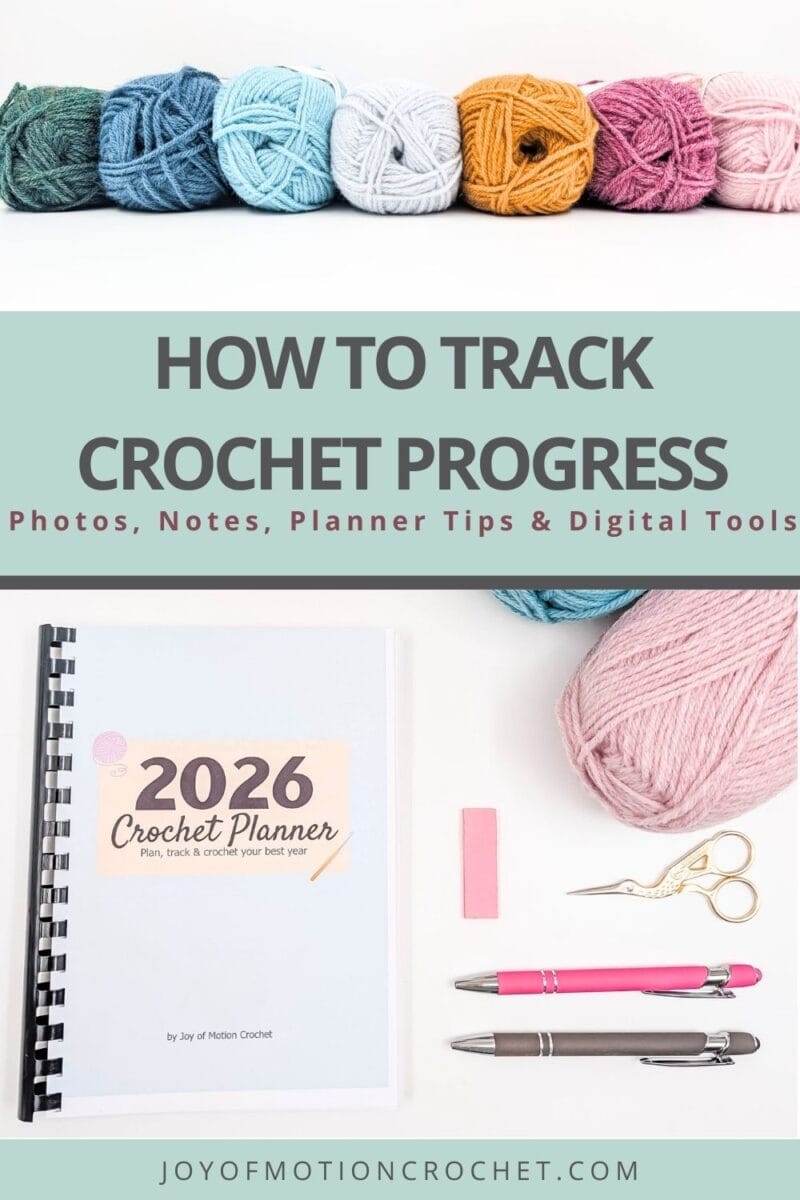
Track Your Crochet Progress with Photos
Photo tracking is one of the easiest, fastest, and most visual ways to track crochet progress and document your crochet journey.
Why crocheters should take progress photos
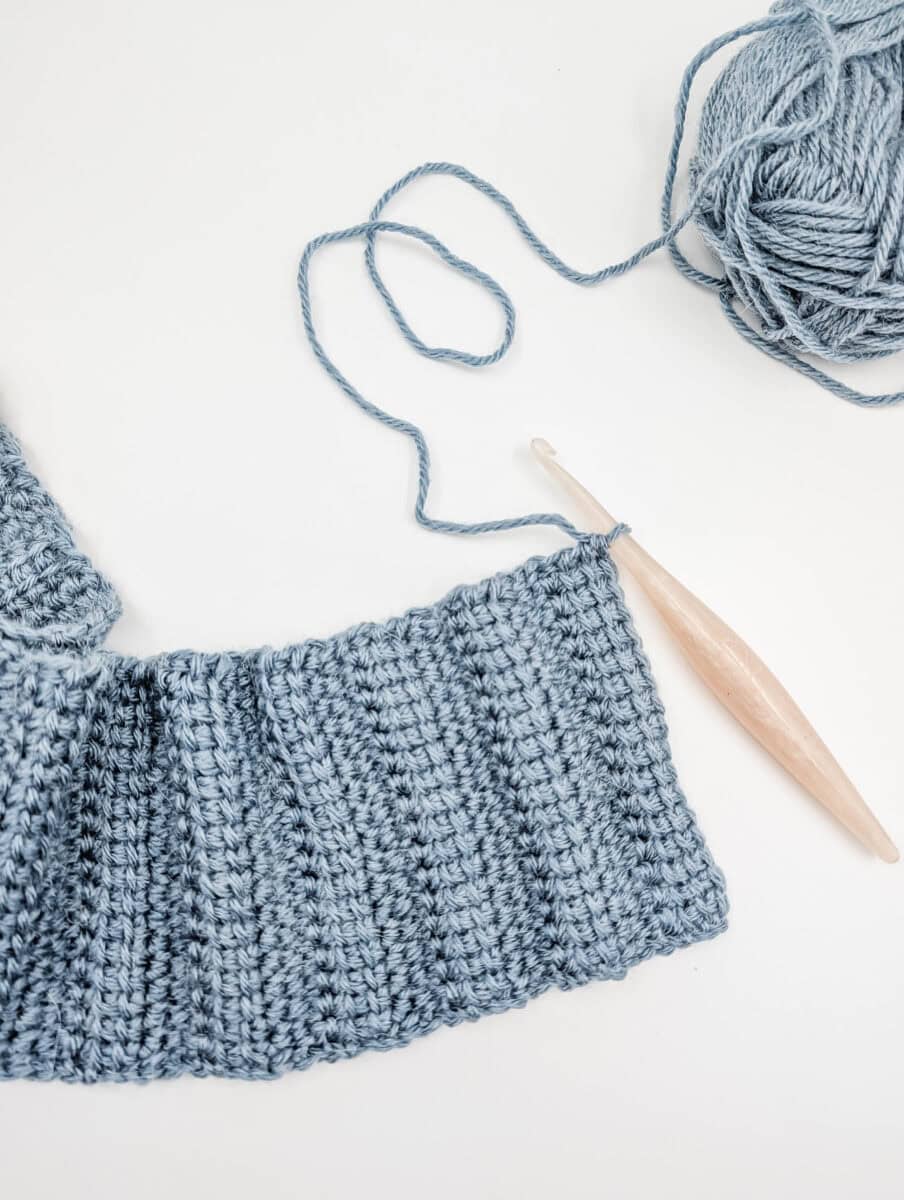
- Helps you clearly see tension, stitch definition, and technique growth.
- Reminds you how far a project has come (especially large garments or blankets).
- Makes it easier to recreate projects later.
- Perfect for organizing by season, yarn type, or skill level.
What to photograph
- Your starting point (yarn, hook, pattern).
- Milestones or weekly progress updates.
- Close-up stitch details.
- Finished pieces styled in natural light.
Would you like to save this?
We will email this pattern to you, so you can come back to it later.
Free, and you can unsubscribe any time.
How to organize crochet photos
Create a folder system like:
- Crochet 2026 → WIPs
- Crochet 2026 → Finished Projects
- Crochet 2026 → Yarn Stash
- Crochet 2026 → Inspiration
This makes it easy to revisit projects or compare skills over time — especially helpful when working on granny squares or using up leftovers with scrap yarn crochet projects.
Keep Crochet Notes to Improve Your Skills Over Time
Taking notes helps you track crochet progress and remember the details that matter.
What crochet notes should include
- Yarn brand, colorway, and fiber.
- Hook size and any changes you made.
- Pattern name or link.
- Modifications.
- Problem-solving notes for row count or tricky rows.
- Start and finish dates.
- Thoughts on the final result.
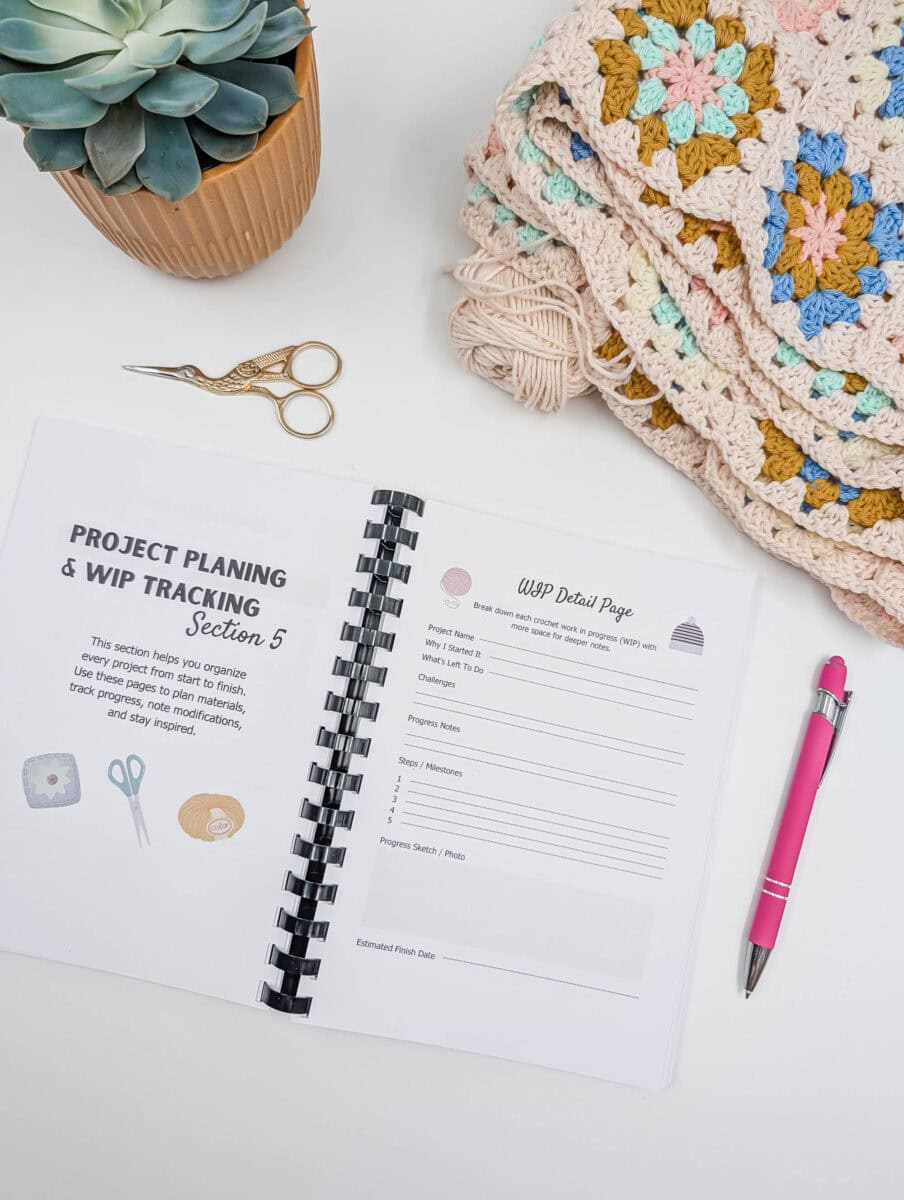
Where to keep your crochet notes
- A physical notebook or journal.
- A small notepad in your project bag.
- A notes app on your phone.
- Sticky notes inside printed patterns.
- Crochet Planner
Even a few notes can save time on future projects and improve your consistency — especially when tracking stitches like the double crochet or managing your yarn with stash‑busting crochet patterns.
Use a Crochet Planner for Organized, Stress-Free Crocheting
A crochet planner gives you a central place to track crochet progress and every idea, project, WIP, and goal.
What to track in your crochet planner
- WIPs and finished projects.
- Yarn stash inventory.
- Monthly and seasonal goals.
- Gift lists and deadlines.
- Pattern ideas and inspiration.
- Crochet habits and reflections.
- Project timelines with notes.
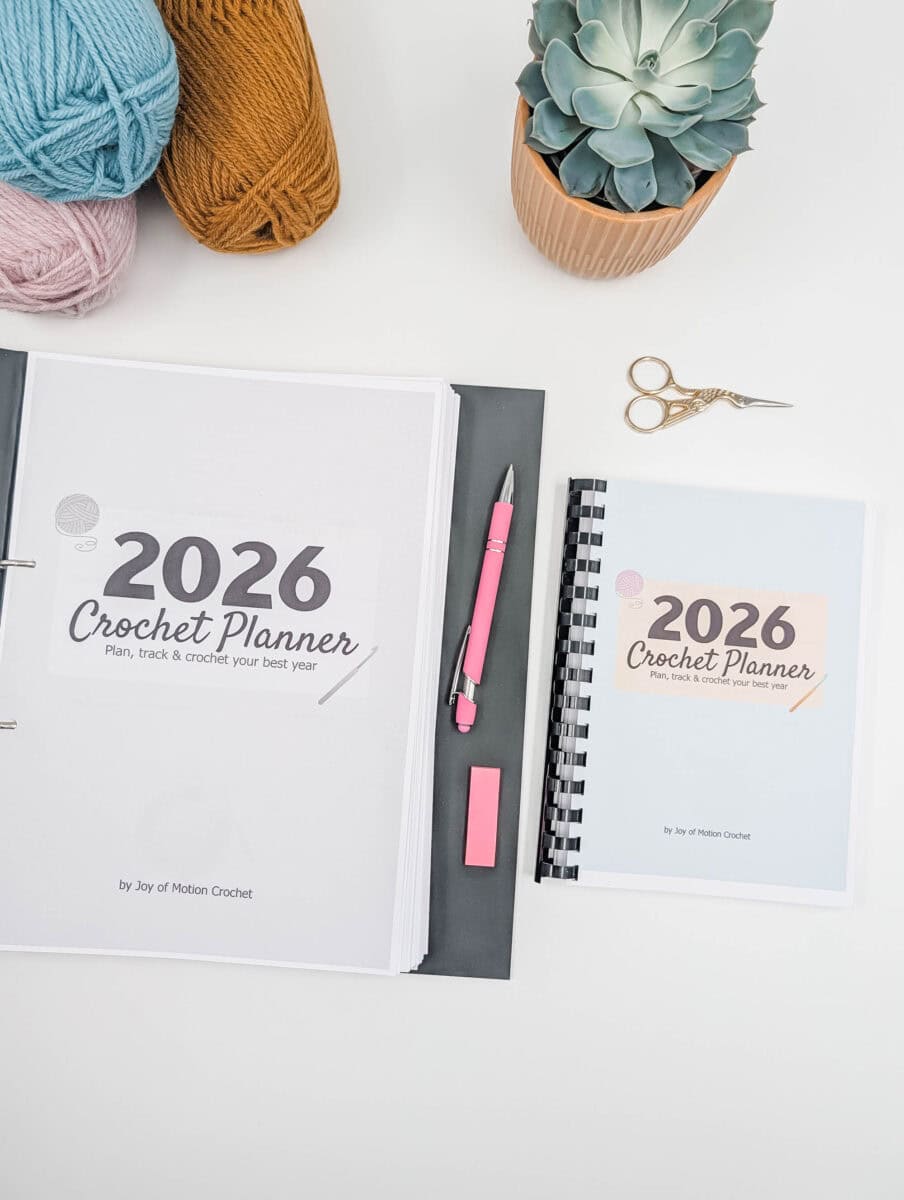
Why crochet planners are so effective
- Everything is stored in one place.
- Helps prevent project overwhelm.
- Encourages intentional project planning.
- Makes it easy to track your creativity throughout the year.
Whether you prefer printed pages or a digital format, planners make crochet feel more enjoyable and organized.
Digital Tools That Make Tracking Crochet Easy
If you like working digitally, these tools can help you track crochet progress and keep everything neat and accessible.
Digital tools for crocheters
- Google Docs/Sheets for yarn or project trackers.
- Notion, Evernote or Trello for organizing WIPs.
- Pinterest boards to save pattern inspiration.
- Cloud storage (Google Drive or iCloud) for photo organization.
Benefits of digital tracking
- Sync across devices.
- Easy to search.
- Great for photographers and heavy note-takers.
- Convenient if you crochet on the go.
Crochet Project Tracking Checklist
Use this checklist to track crochet progress on every project:
- Project name
- Pattern link
- Yarn brand + color
- Hook size
- Gauge details
- Start and finish dates
- Any modifications
- Progress photos
- Blocking notes
- Final thoughts or improvements
This helps you build a consistent tracking system you can rely on.

Track Your Yarn Stash to Save Money & Plan Better Projects
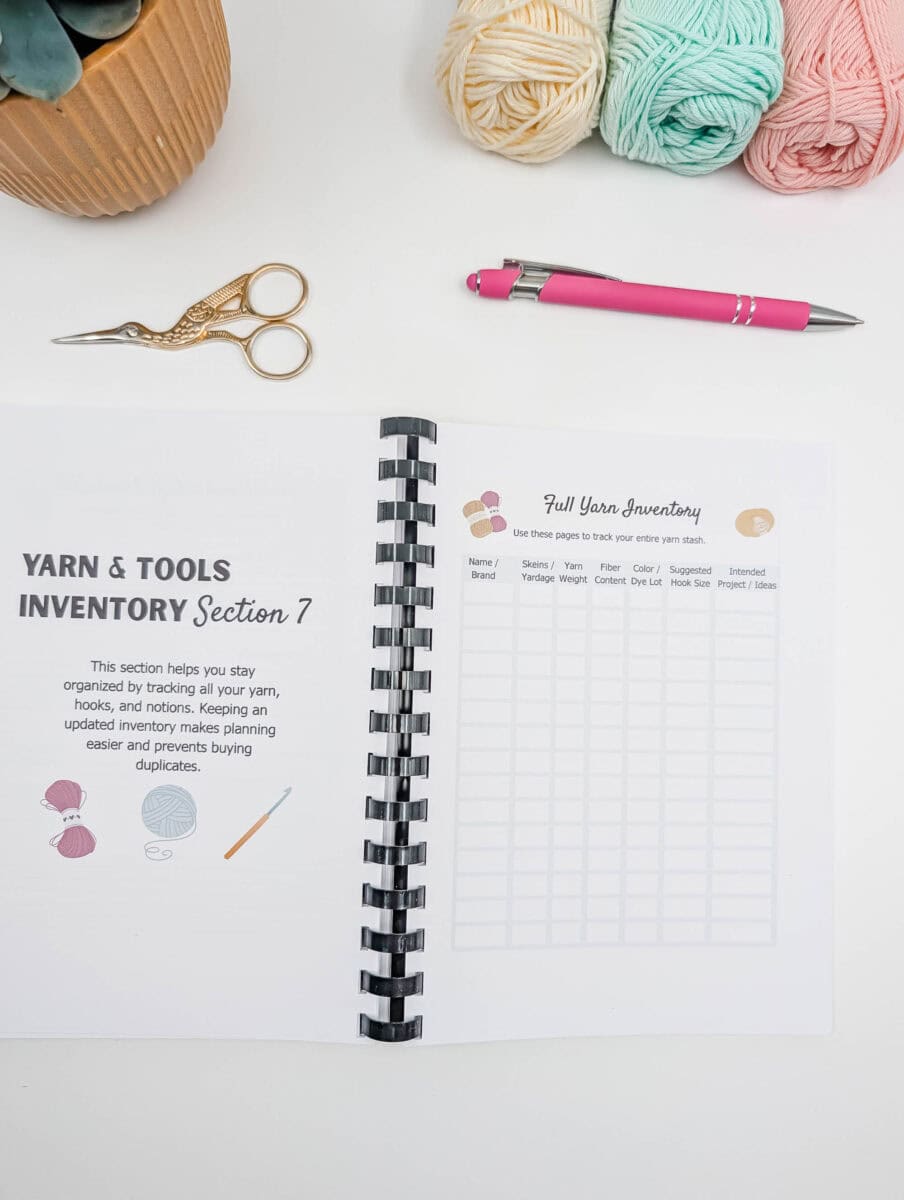
Keeping a yarn inventory makes it easier to track crochet progress across projects and to:
- Shop your stash before buying more.
- Match yarn with future patterns.
- Plan stash-busting projects.
- Track dye lots and fiber information.
What to include in your yarn inventory
- Fiber type
- Weight category
- Yardage
- Color name
- Quantity
- Notes for project ideas
A tidy stash = more inspiration and fewer forgotten skeins.
Track Crochet Goals, Challenges & Monthly Themes
Progress tracking doesn’t stop at WIPs — it can support your entire creative routine.
Goal ideas to track
- Monthly crochet goals.
- Seasonal makes.
- New stitches or techniques.
- Scrap yarn goals.
- Gift-making plans.
- Skill-building challenges.
This gives you a big-picture view of your creative year and helps you track crochet progress over time.
Review Your Crochet Progress Each Month
Reflection helps you stay motivated and inspired.
Monthly crochet review prompts
- What did I finish?
- What am I still working on?
- What crochet mistakes slowed me down?
- What new stitches or skills did I learn?
- What inspires me for next month?
Add a seasonal review to identify long-term trends.

Celebrate Your Crochet Journey
Crochet progress isn’t just about the final stitch — it’s the joy, creativity, and learning that happen along the way. Tracking your projects helps you notice growth, celebrate your creativity, and stay inspired all year long.
Whether you prefer taking photos, using a planner, or digital tools, choose the methods that feel natural to you. Every stitch tells a story — and your progress is worth celebrating.